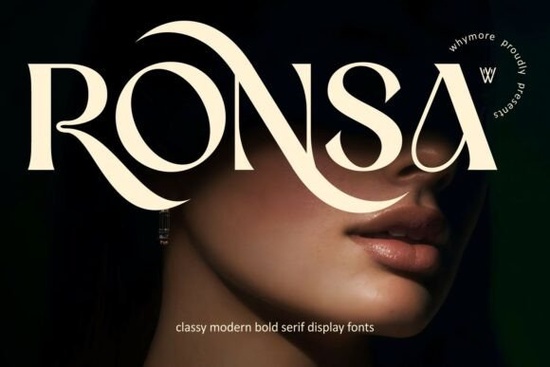
If you're looking for a serif font that blends bold presence with refined elegance, Ronsa Font might be exactly what your next project needs. Designed for impact without sacrificing sophistication, Ronsa delivers strong visual weight through its high-contrast strokes and carefully sculpted curves. It’s especially well-suited for designers and small business owners who want their branding or print materials to feel premium and intentional.
Ronsa works beautifully in contexts where clarity meets luxury think boutique packaging, upscale editorial layouts, wedding stationery, or even high-end logo design. Unlike overly ornate serifs that can feel dated, Ronsa balances modern minimalism with classic typographic grace. Its letterforms are distinctive but not distracting, making it readable at larger sizes while still holding up in smaller applications like business cards or product tags.
What makes Ronsa stand out among modern serif fonts?
Many contemporary serif fonts lean either too traditional or too starkly minimalist. Ronsa finds a sweet spot in between. Its bold structure gives headlines authority, while the subtle tapering of strokes adds refinement. This duality makes it versatile across both digital and print media a rare quality in display fonts.
If you’re comparing options, you might also consider other stylish serifs available on Creative Fabrica. For instance, Gibs Font offers a more geometric take on the modern serif, while Dream to Berich leans into dramatic flair with extended ascenders and delicate terminals. And if you prefer something with a touch of whimsy, Sparky Dream blends playful energy with serif tradition. Each has its place but Ronsa excels when you need confidence paired with class.
Who should use Ronsa Font?
This font is particularly useful for:
- Small business owners creating logos, signage, or packaging for luxury goods (jewelry, skincare, gourmet foods).
- Print-on-demand sellers designing quote art, wall prints, or custom apparel that calls for a sophisticated aesthetic.
- Graphic designers working on editorial spreads, book covers, or brand identities where typography sets the tone.
- Crafters and hobbyists making invitations, greeting cards, or handmade labels who want professional-looking results without complex design skills.
Because Ronsa is a display font, it’s best used for headlines, titles, or short phrases rather than body text. But within that role, it performs consistently whether rendered on screen or printed on textured paper.
How does Ronsa handle real-world use?
In testing across mockups from embossed leather tags to Instagram story banners Ronsa maintains its character without becoming muddy or overwhelming. The spacing feels generous enough for legibility but tight enough to convey strength. Ligatures and alternate glyphs (if included in the version you license) can add extra polish for typographic details.
One practical note: because of its bold weight and contrast, avoid using Ronsa at very small sizes or on low-resolution screens. It shines brightest when given room to breathe ideal for hero sections, cover art, or focal-point typography.
Tips for pairing Ronsa with other typefaces
To keep your design balanced, pair Ronsa with a clean, neutral sans-serif. Think fonts like Montserrat, Lato, or even a simple Helvetica variant. The goal is to let Ronsa command attention while supporting text remains unobtrusive. Avoid pairing it with another decorative or high-contrast serif that can create visual competition.
Also, consider color and texture. Ronsa looks stunning in deep blacks, rich burgundies, or metallic foils on matte backgrounds. On digital platforms, a soft shadow or subtle letter-spacing adjustment can enhance its presence without overdoing it.
Before you commit, preview Ronsa in context. Type out your actual headline or logo text, not just “Aa Bb Cc.” See how it feels with your brand’s imagery and messaging. That real-world test often reveals more than any spec sheet.
Ready to use Ronsa? Here’s a quick checklist:
- Confirm your project needs a bold, elegant display font not body copy.
- Check licensing terms on Creative Fabrica for your intended use (personal, commercial, POD, etc.).
- Test readability at your final output size (print or screen).
- Pair it with a simple sans-serif for supporting text.
- Use generous margins or negative space to let the font breathe.
When used thoughtfully, Ronsa adds instant polish and presence without trying too hard. That’s the mark of a truly useful typeface.
Try It Free Sparky Dream Font: Playful Typography for Creative Projects
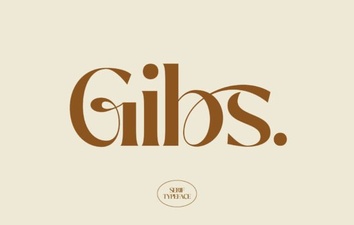 Gibs Font: a Distinctive Retro Typeface for Designers
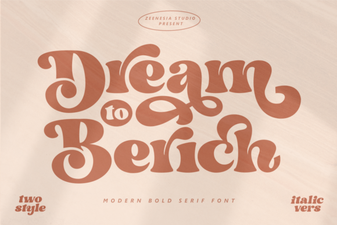 Dream to Berich Fonts: Design & Use Ideas
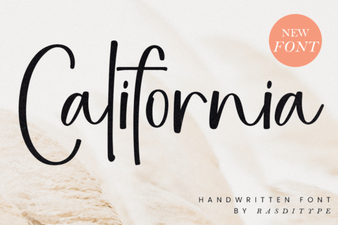 California Font Design Style & Inspiration Guide
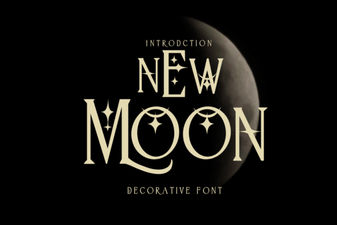 New Moon Font: Design, Download & Creative Uses
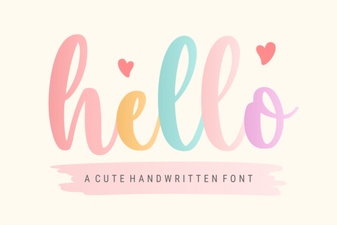 Hello Font: Creative Designs for Your Projects